


Skin Tag Removal in Dartford: Options, Cost and Recovery
Skin tag removal can help if a small growth catches on clothing, becomes irritated or affects how you feel about your skin. If you are considering skin tag removal in Dartford, the first step is confirming what the growth is. A harmless tag may be left alone; removal should follow an assessment of your skin and the treatment area.
Would you like advice about a skin tag?
Start with a free 15-minute chat with our patient coordinator at Elite Aesthetics in Greenhithe, Dartford, Kent. Clinical assessment is arranged separately.
What is a skin tag?
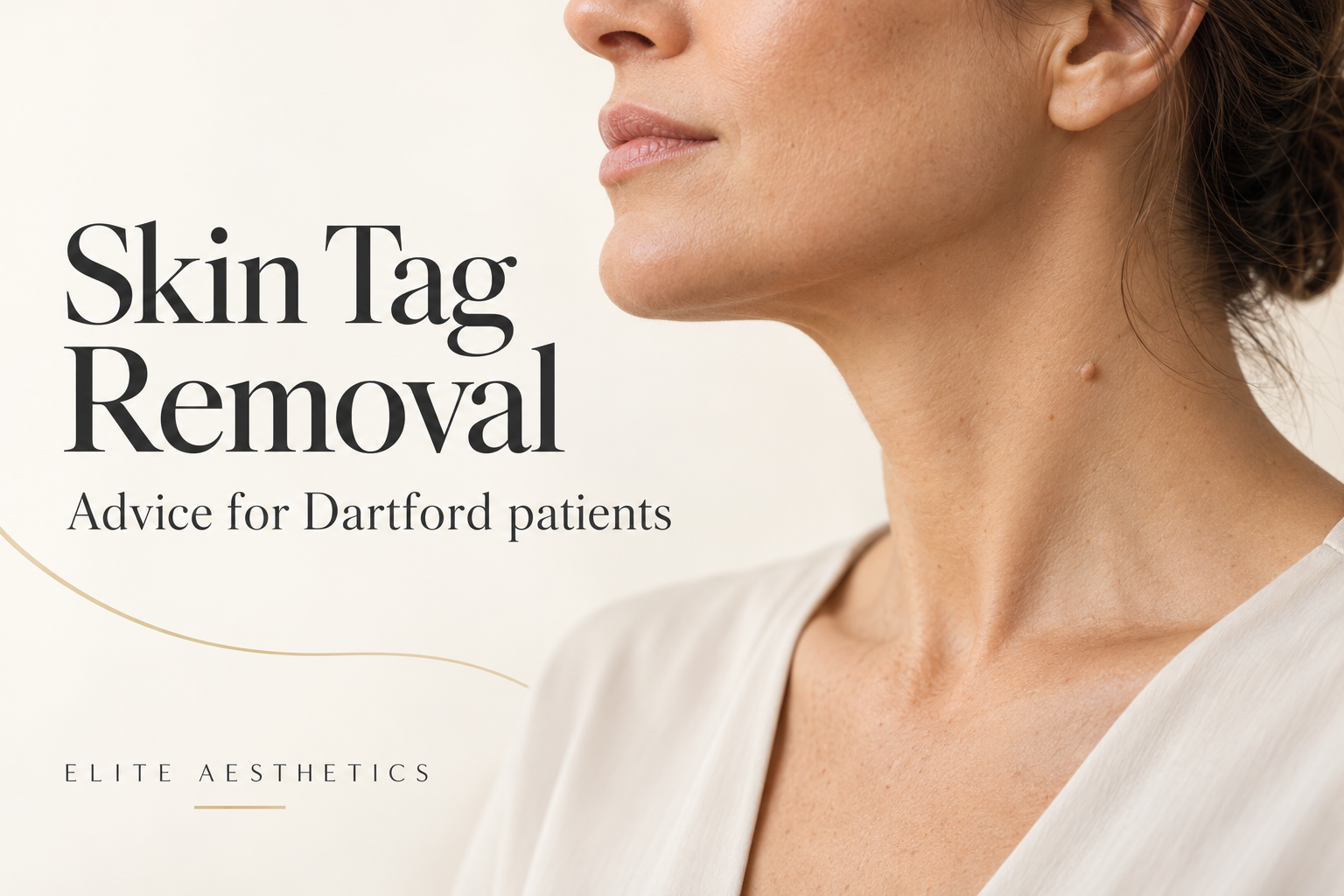
A skin tag is a soft, usually harmless growth, sometimes attached by a narrow stalk. The medical name is an acrochordon. Tags can be skin-coloured or darker and commonly develop around the neck, underarms and other skin folds.
They may be small but still troublesome when a collar, necklace or bra repeatedly rubs against them. You do not have to feel embarrassed about asking for advice.
Is it definitely a skin tag, or could it be something else?
Some warts, moles and other growths can resemble skin tags. Comparing your skin with an online photograph cannot reliably establish the diagnosis. DermNet’s skin tag guide explains that several different lesions may look similar.
Arrange a GP assessment if a growth gets bigger, becomes painful or starts bleeding, or if you develop lots of tags. Mention any change in colour, shape or surface too. An uncertain or suspicious lesion may need further investigation or referral before cosmetic treatment is considered.
Getting the diagnosis right matters more than choosing the quickest removal method.
When is skin tag removal worth considering?
You may consider removal if a confirmed tag repeatedly catches during dressing or shaving, or if its appearance bothers you. Leaving a harmless, comfortable tag alone is also a reasonable choice.
Explain where the tag is, how long it has been there and what you hope treatment will change. This helps the clinician weigh the benefit against the possibility of a mark or scar afterwards.
Different approaches suit different lesions. Size, location and the surrounding skin affect the choice. The American Academy of Dermatology describes freezing, electrical treatment and removal with sterile scissors or a blade among the methods clinicians use.
| Approach | What to discuss |
|---|---|
| Freezing (cryotherapy) | The tag is treated with intense cold. Ask about blistering, pigment changes and whether another session may be needed. |
| Snip or surgical removal | The growth is removed with sterile instruments. The clinician plans anaesthetic and bleeding control as appropriate. |
| Electrical or heat-based treatment | Targeted energy treats the lesion. Ask about the healing area and aftercare. |
| Plasma treatment, including Plexr | Elite lists skin tags among its Plexr indications. An assessment should establish whether this option suits your lesion and skin. |
These are general options, not a list of methods all offered at Elite. You can read about the clinic’s Plexr Soft Surgery treatment before discussing the recommended approach.
Not sure which removal option is right for you?
Ask our team about assessment and the next step. A clinician needs to examine the growth before recommending treatment.
Does skin tag removal hurt?
Discomfort depends on the method and location. Some procedures use local anaesthetic; an injection can sting briefly. Other treatments may cause a short-lived stinging or burning sensation.
Ask how the area will be numbed, what you might feel and what to expect afterwards. Treatment should not be described as universally painless. Tell the clinician about previous reactions to anaesthetic or concerns about needles.
How much does skin tag removal cost in Dartford?
Elite Aesthetics’ published Plexr price list currently lists skin tag treatment from £150. This is a starting price, not a confirmed quote for every tag or a guarantee of what is included.
The number of tags, their size and position, and the proposed treatment may affect the quotation. Before agreeing to proceed, ask:
- Is the assessment charged separately?
- How many tags does the quotation cover?
- Are anaesthetic, dressings and any review included?
- What happens if further treatment is recommended?
A clear plan helps you compare care and costs. Confirm the current price and inclusions with the team before arranging treatment.
Find out what your treatment price includes
Tell our patient coordinator where the tag is and whether you have one or several. Ask about the current starting price and assessment arrangements.
How long does skin take to heal after removal?
Healing varies with the treatment and site. Some methods leave a small wound; others cause a scab or blister. Ask for a timetable specific to your procedure rather than assuming every technique heals in the same number of days.
Follow the instructions you are given for washing, dressings, skincare and activities. Avoid picking at a healing area. Discuss any forthcoming holiday, swimming or clothing that may rub against the site before treatment.
You should know who to contact if redness spreads, pain worsens, discharge develops or the wound is not healing as expected.
Can skin tag removal leave a scar or darker patch?
Yes. Removal can leave a scar or a change in skin colour. Pigmentation changes deserve particular discussion for brown or black skin. They may settle, but some marks can last.
Other risks include bleeding, infection and incomplete removal. Share any history of raised or keloid scars and ask how your skin and the treatment site affect the risk. No technique can promise scar-free results.
Can I remove a skin tag at home?
Do not cut, burn or tie off a growth yourself. Home removal can cause bleeding, infection and scarring, and you may be treating something that is not a tag. Wart treatments and online removal products are not substitutes for identifying the lesion.
The American Academy of Dermatology’s advice on home removal highlights the risks of injury and delayed diagnosis. An assessment gives you a safer basis for deciding what to do.
Why consider Elite Aesthetics for skin tag advice?
Elite Aesthetics is a doctor-led, CQC-registered clinic in Greenhithe, Dartford, Kent. Medical Director Dr Shirin Lakhani leads the clinic’s medical approach.
Our published Plexr information includes skin tags as a treatment indication. Your discussion should establish whether removal is appropriate, who would treat you and how you would be supported afterwards. Medical assessment comes before a cosmetic procedure.
Visit us at 32 Grove House, Wainwright Avenue, Greenhithe, Kent, DA9 9XN. For Dartford patients, planning any assessment and follow-up visits is part of choosing care that works around daily life. Ask our team about practical access needs when enquiring.
Removal for appearance alone is generally a private expense. NHS guidance describes skin tag removal as cosmetic treatment. A changing, painful or bleeding growth still warrants GP assessment; cosmetic funding rules are not a reason to ignore symptoms.
Will the skin tag grow back?
A completely removed tag does not usually return, but other tags can develop. Removal does not prevent future growths. If a bump reappears, have it checked rather than assuming it is the same lesion.
Can you treat a tag on an eyelid or intimate area?
Location affects the assessment and choice of practitioner. Explain exactly where the growth is when enquiring. Do not assume a treatment suitable for the neck is appropriate near an eye or on intimate skin.
What should I mention before treatment?
Tell the clinician about medicines, allergies, bleeding problems, previous scarring and conditions that may affect healing. Do not stop prescribed medication unless the prescriber or treating clinician advises you to.
Ready to ask about skin tag removal in Dartford?
Whether a tag catches on a necklace or you simply want to understand your options, start with a conversation. You do not need to choose a procedure before contacting us.
Arrange a free 15-minute patient coordinator chat
Ask practical questions about assessment, treatment availability and the next step. The chat does not commit you to a procedure or establish clinical suitability.
This article provides general information. Diagnosis, treatment suitability and aftercare require an individual clinical assessment.
Further patient information: NHS skin tag guidance.


