


Ear Piercing Keloids: Causes, Treatment and Removal in Dartford
An ear piercing keloid is an overgrowth of scar tissue that extends beyond the original piercing wound. Treatment can help flatten the scar and ease discomfort, but the first step is checking that the lump really is a keloid. Irritation, infection and other raised scars need different care.
At Elite Aesthetics in Greenhithe, Dartford, Kent, we offer doctor-led assessment and keloid scar steroid injections. Whether the lump is becoming more noticeable or making earrings uncomfortable, you can discuss your concerns and find out what treatment may involve.
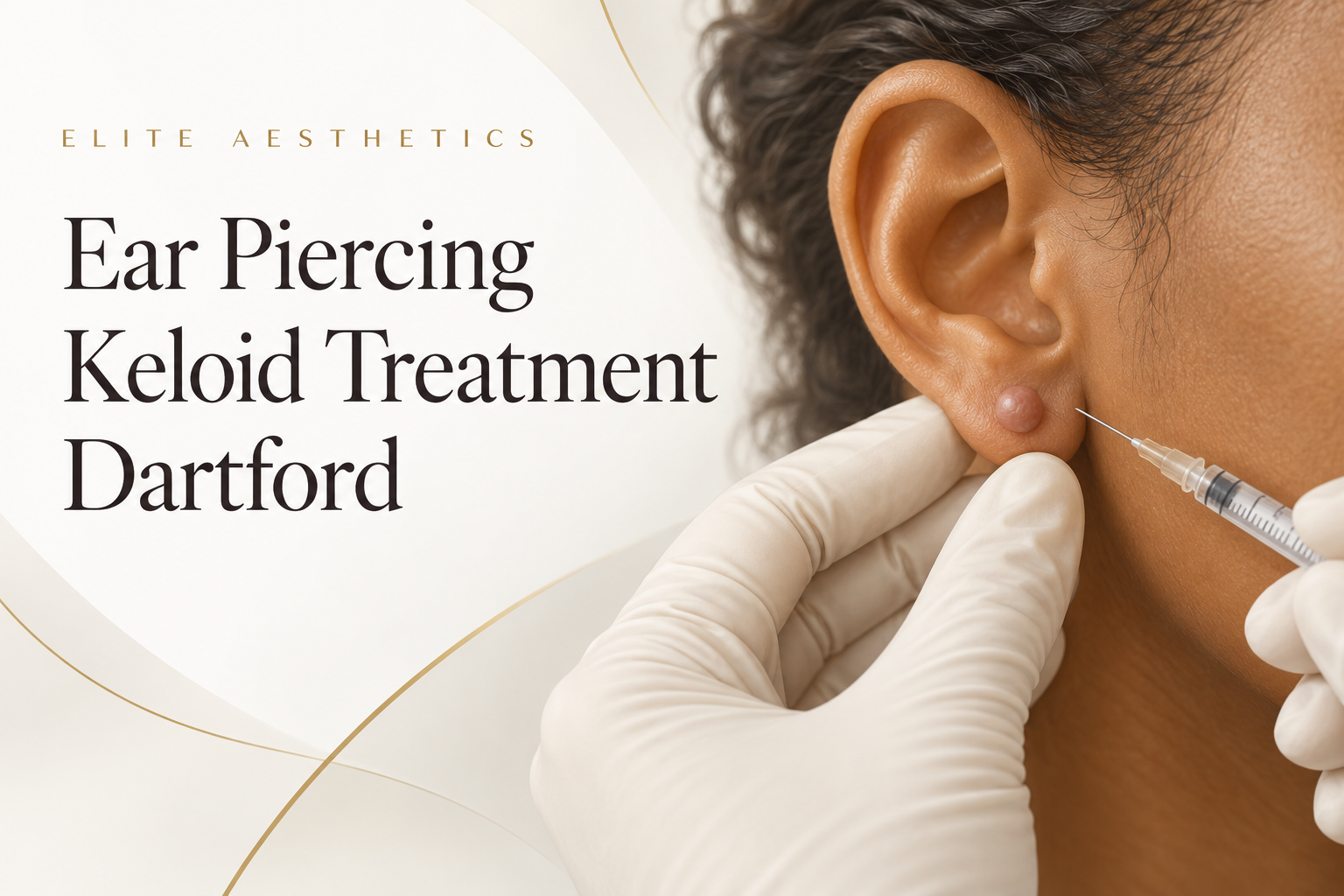
What does an ear piercing keloid look like?
A keloid may start as a small area of thickening near the piercing and gradually become a larger, raised lump. It can develop on the front or back of an earlobe, around cartilage piercings or elsewhere on the ear.
The scar may look smooth or shiny and feel firm or rubbery. Its colour can be similar to your skin, pink, red, purple or darker than the surrounding area. Some keloids itch or feel tender, while others mainly cause concern because of their appearance.
The important feature is growth beyond the original injury. A lump does not have to be large to deserve assessment, particularly if it is changing.
Is it a keloid, a piercing bump or an infection?
“Piercing bump” describes a visible lump; it is not a diagnosis. Appearance alone, especially in a photograph, may not reliably explain what is happening.
| Possible cause | What may help distinguish it |
|---|---|
| Keloid scar | Raised scar tissue that grows beyond the original piercing wound. |
| Hypertrophic scar | A thickened scar that stays within the injured area and may flatten over time. |
| Irritation or another skin reaction | Local swelling may resemble a scar. A reaction to jewellery can sometimes look like a keloid. |
| Infection | Increasing pain, heat, swelling, marked redness or darkening, discharge or feeling unwell need prompt medical attention. |
A doctor can examine the area and decide whether scar treatment is appropriate. If the diagnosis is unclear, further investigation or specialist assessment may be needed.
Think your piercing may be infected? Ask for an urgent GP appointment or contact NHS 111. Leave the jewellery in unless a doctor advises removal. Do not wait for a cosmetic treatment appointment. Read the NHS guidance on infected piercings.
Why do keloids form after ear piercing?
Piercing creates a small wound. In people who develop keloids, healing produces excessive collagen, allowing scar tissue to grow beyond that wound. This can happen after a minor injury and does not necessarily mean the piercing was done badly.
Anyone can develop a keloid, although susceptibility is higher in some groups, including people with African, Asian or Hispanic ancestry. A previous keloid or family tendency also matters. Tell your doctor about raised scars elsewhere, even if they developed years ago.
The British Association of Dermatologists’ keloid leaflet explains that scars can appear weeks after an injury or take a year or longer to become apparent.
How can an ear keloid be treated?
The aim is a flatter, softer and more comfortable scar, with a plan to manage recurrence. Treatment depends on the scar’s size, position, symptoms, previous treatment and your priorities.
Steroid injections
Corticosteroid medicine can be injected directly into the keloid to help reduce its thickness and relieve symptoms. At Elite Aesthetics, we use Kenalog (triamcinolone acetonide) or other medicines, selected by the treating doctor, to manage keloid scars and help reduce the risk of them returning. Read more about our keloid scar steroid injections in Dartford.
A course of appointments may be recommended, usually several weeks apart. The response is reviewed before deciding whether further injections are appropriate. This is a gradual process rather than an instant removal.
Silicone and pressure therapy
Silicone gel or sheets may be recommended for healed skin. For some ear keloids, a clinician may suggest pressure earrings or a fitted device, including after other treatment.
These devices are different from ordinary earrings. Their fit and wearing schedule need guidance; do not improvise compression with a tight earring back.
Surgery and other specialist options
Some larger or persistent keloids require specialist management. Surgery removes scar tissue but creates another wound, so it needs careful planning and additional treatment to reduce regrowth. Cutting out a keloid alone can result in a larger recurrent scar.
Other options include cryotherapy or laser treatment in selected cases. Your assessment should establish which approach is appropriate and whether referral is needed. Your doctor will explain which options are relevant and whether specialist care is needed.
Further information: American Academy of Dermatology guidance on keloid treatment.
How do you help reduce the risk of a keloid returning?
Controlling recurrence is part of the treatment plan. Your doctor will consider how the scar has behaved, whether previous treatment helped and which medicine is appropriate. Kenalog or another suitable medicine may be recommended alongside aftercare or pressure therapy where appropriate.
The aim is to help maintain improvement, not simply change the scar’s appearance at one appointment. Keloids can still recur, so reviews and early assessment of renewed thickening are important.
Will injections hurt, and what are the risks?
Injection into firm scar tissue can be uncomfortable. Tell the doctor if pain is a concern so that comfort measures can be discussed before treatment.
Possible effects include tenderness, skin thinning, changes in pigmentation and visible small blood vessels. Your doctor will discuss the risks relevant to your skin and the proposed treatment. A keloid can also return after an initial improvement.
Careful planning is particularly important when changes in skin colour would be noticeable. Our guide to keloid treatment for darker skin explores this consideration further.
How much does ear keloid treatment cost in Dartford?
Elite Aesthetics currently lists keloid scar treatment from £300 on its treatment price page. This is a starting price, not a quotation for a complete course or surgical removal.
Your total depends on the scar, the recommended approach and the appointments required. Before committing, ask about the consultation fee, treatment charges, review arrangements and any separately supplied products or devices.
For the wider factors that influence pricing, read our keloid scar removal cost guide.
What happens when I contact Elite Aesthetics?
- Speak with our patient coordinator. Use the free 15-minute chat to ask about the process and costs. It is not a medical consultation.
- Arrange a doctor’s assessment. The scar’s size, thickness, symptoms and history are considered before treatment is recommended.
- Discuss your options. Ask what improvement is realistic, what the plan will cost and how the response will be reviewed.
Bring details of previous scar treatments and mention any tendency to form keloids. Useful questions include whether your priority is reducing itching, flattening a visible lump or improving comfort around jewellery.
The clinic is in Greenhithe, Dartford, Kent, with free parking on site. This can make repeat visits practical for patients in Dartford and the surrounding area, including Gravesend. Patients travelling from London can ask the team about visit arrangements.
Elite Aesthetics is a CQC-registered clinic. Keloid treatment is medically led under Dr Shirin Lakhani, the clinic’s Medical Director. Assessment, realistic expectations and a plan for reviews matter more than a promise of complete removal.
FAQ
Will an earring keloid go away if I remove the earring?
Removing jewellery does not reliably make an established keloid disappear. Ask a clinician whether removal or a different device is appropriate. If infection is suspected, follow NHS advice to leave jewellery in until a doctor advises otherwise.
Can I pop or drain a keloid behind my ear?
No. A keloid is scar tissue, not a spot containing material that can be squeezed out. Trying to pop, cut or drain it can injure the skin and introduce infection. An unexplained lump should be assessed.
Can I wear earrings again after treatment?
Discuss this before treatment, especially if keeping the piercing is important to you. Ordinary earrings may interfere with a pressure-device plan, and a piercing can close. Re-piercing creates a new injury and can trigger another keloid.
Can a healed piercing develop a keloid later?
Yes. A keloid may become noticeable long after the initial wound. A new or enlarging lump should still be examined rather than assumed to be harmless scar tissue.
Can I prevent another ear piercing keloid?
If you have a history of keloids, avoiding further piercings reduces exposure to a known trigger. Tell any clinician planning a procedure about your scar history. The American Academy of Dermatology’s prevention advice explains why further skin injury deserves careful consideration.
Can I get ear keloid treatment through the NHS?
Your GP can assess a troublesome scar and advise on treatment or referral. The options available depend on clinical need and local services. Private assessment is another route if you would like to discuss a treatment plan at Elite Aesthetics.
Does ear keloid removal leave a scar?
Surgery creates a new scar, and keloids can regrow. Non-surgical treatment aims to improve the existing scar rather than guarantee completely unmarked skin. Ask what appearance is realistic for your particular ear.
Medical information: NHS guidance on keloid scars and NHS scar information. This information supports a discussion with a healthcare professional and does not replace individual assessment.


